


Tragedy Strikes Near Machu Picchu: Train Collision Claims Life and Injures Many
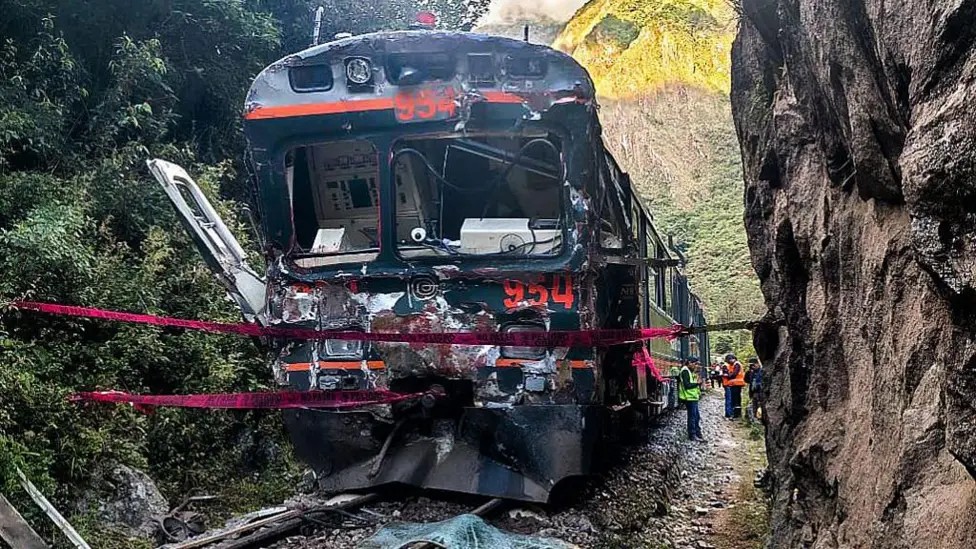
In a devastating incident near Peru’s iconic Machu Picchu, a head-on collision between two trains has left one driver dead and at least 40 passengers injured. The crash unfolded on Tuesday on the single track that connects the ancient Inca citadel to the bustling town of Aguas Calientes, a crucial gateway for tourists visiting the UNESCO World Heritage site.
Emergency responders faced a chaotic scene, with local government reports indicating that 20 ambulances were dispatched to assist victims. Injured individuals were swiftly transported to medical facilities in the nearby city of Cusco, with health officials confirming that at least 20 of the injured are in serious condition. Eyewitness accounts reveal that hundreds of tourists remained stranded at the site, awaiting evacuation, which has been complicated by the rugged terrain surrounding the crash area.
The U.S. Embassy in Peru has confirmed that several American citizens were among those injured, while the UK Foreign Office is providing support to British nationals affected by the tragedy. This incident not only sparks concerns over tourist safety but also raises questions about the efficacy of the transport systems leading to one of the world's most treasured archaeological sites.
The collision involved trains operated by PeruRail and Inca Rail, two major service providers that facilitate travel to Machu Picchu. In a somber statement, PeruRail expressed profound regret over the accident, stating that their personnel had immediately begun administering first aid to those affected, including the train driver and conductor.
As authorities work to piece together the cause of this tragic event, local communities continue to voice their grievances regarding the transport options available to visitors. Many argue that the bidding process for railway services lacks transparency, leaving the local population feeling marginalized. The high ticket prices for train and bus rides have further exacerbated tensions, as these routes are often the only viable options for reaching the historical site.
Machu Picchu, built in the 15th century high in the Peruvian Andes, stands as a testament to Incan ingenuity and is recognized as one of the Seven Modern Wonders of the World. Visitors typically embark on a 90-minute journey by train or undertake the scenic Inca trail, guided by registered tour operators. Since the introduction of daily visitor caps in 2011, intended to protect the site from overtourism, authorities remain vigilant, yet concerns persist about maintaining the balance between preservation and accessibility.
As this tragic event unfolds, discussions regarding the improvement of safety measures and transport regulations are likely to intensify, as stakeholders seek to prevent future disasters in this breathtaking yet vulnerable corner of the world.












0 Comment(s)